Monthly Archives: March 2014

Un-Business Cards

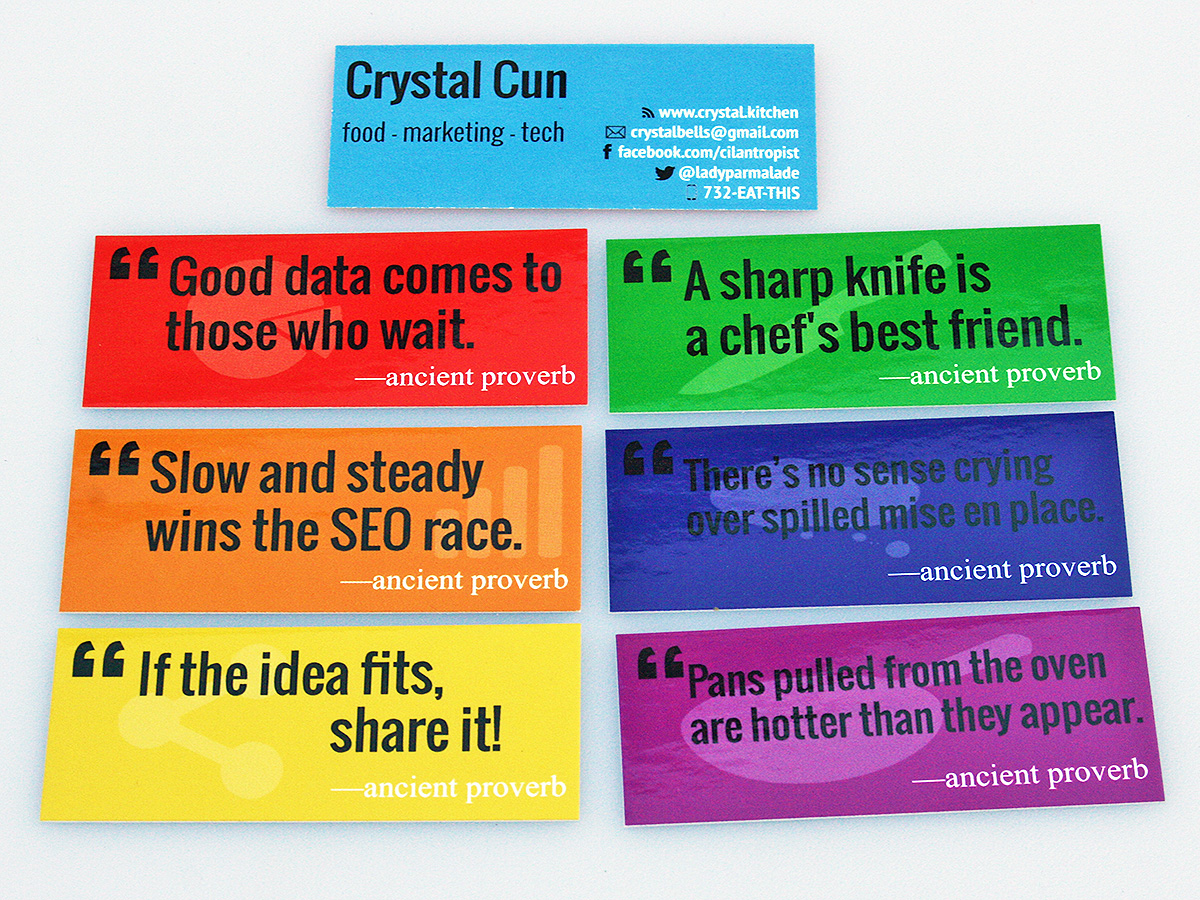
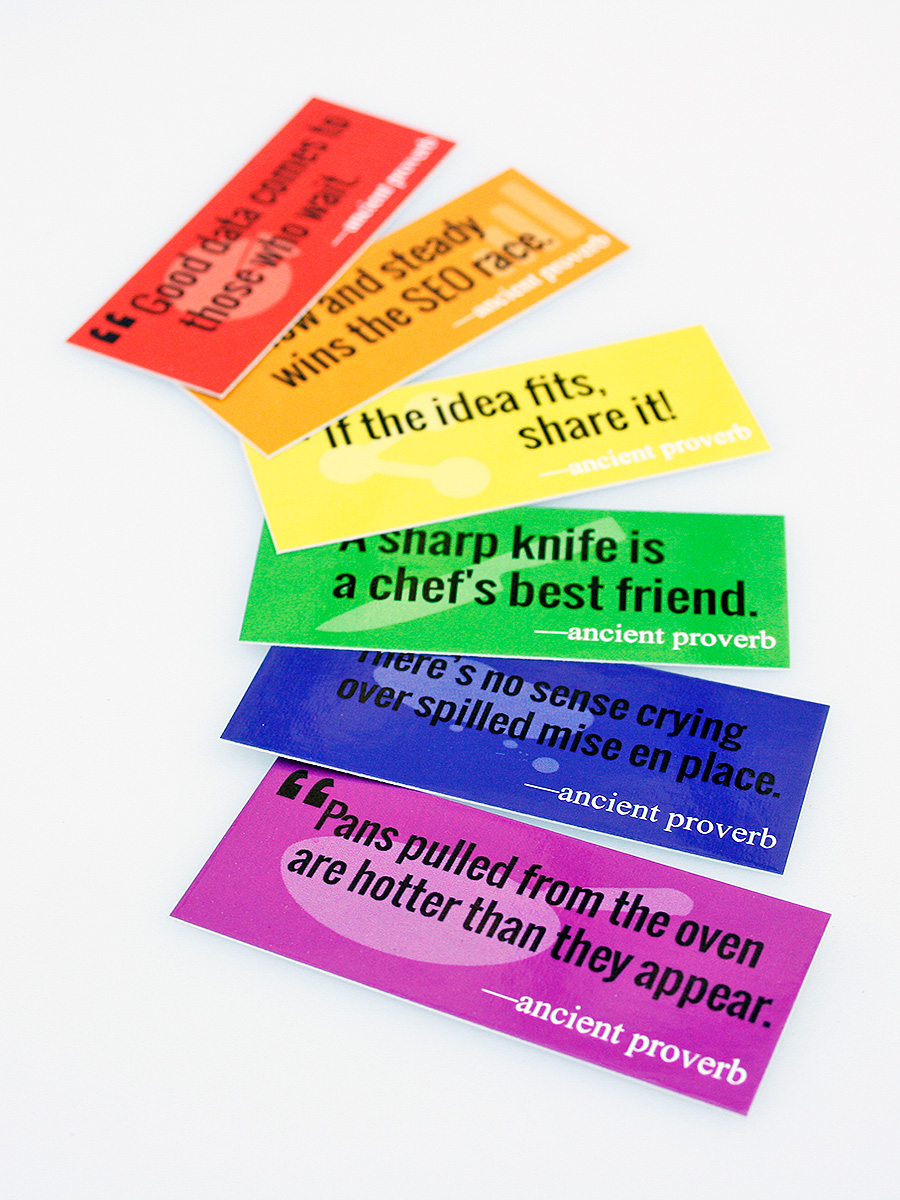
How do you keep in touch with new contacts in style? Moo has a great “Printfinity” feature where you can print multiple backs to your cards, making it easier to display a photography portfolio or a series of ideas. Inspired by these design-oriented quotes, I decided to create a series of food and marketing-related twists on traditional proverbs for my personal cards. Check it out:

Food Marketing Minicards

Personal Minicards

Good data comes to those who wait

Slow and steady wins the SEO race

If the idea fits, share it!

A sharp knife is a chef's best friend

There's no sense crying over spilled mise en place

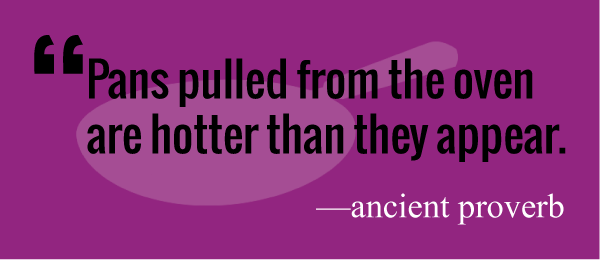
Pans pulled from the oven are hotter than they appear.

Culinary School: Why I’m making the worst food of my life

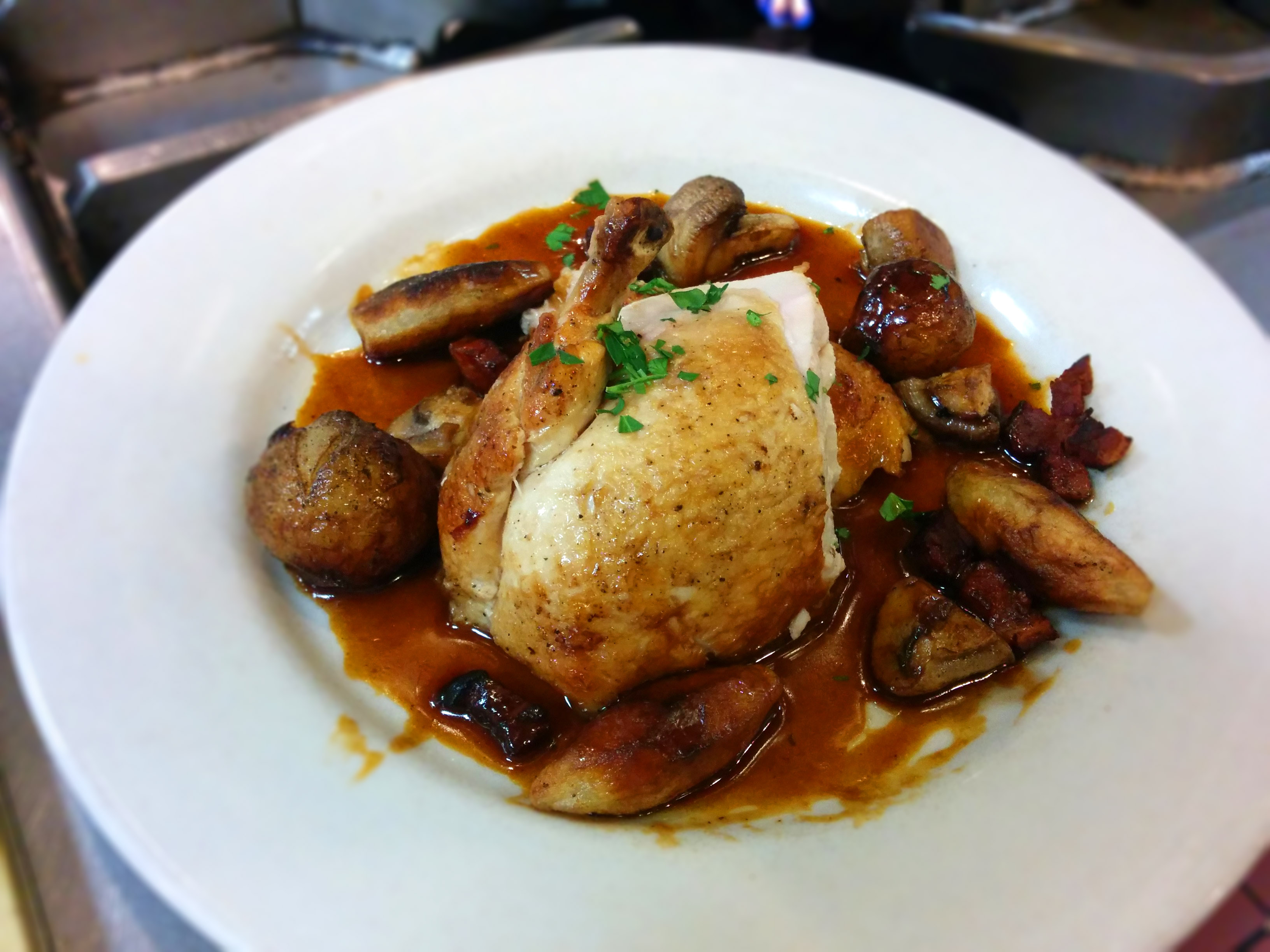
Poulet Saute Chasseur

Nights in culinary class move in a dance of steel and time pressure. Yank out the wishbone. Quarter the chicken. Sear the skin. Chop the mirepoix. Simmer the stock. Strain the sauce. Pull the chicken from the oven. Plate the food. Run to the front. Hope for the best.

Chef Ray glanced at my plate of poulet sauté chasseur (hunter-style chicken) and gave me a hard look. “I think I’ve told you this before,” he said. “This plate. What’s wrong with it?” I looked down at my chicken. Among the finely shredded flakes, there were some unruly tufts of parsley perched on top, shamelessly advertising their prowess at escaping my knife. “I know, I know,” I apologized, “the parsley isn’t chopped small enough. And there’s some pieces of stems.”

With a spoon, he pointed at a resolutely intact parsley leaf. “Look,” said Chef Ray, “you spent two hours making this dish, and you put herbs like this on the plate it and it just ruins the presentation.” He chased the offending chunk of parsley to the edge. “The chef that taught me insisted on really finely chopped herbs, so since that’s how I was taught, this is a pet peeve of mine too.” Chef Ray prodded at the chicken. “This is cooked well, it’s not overdone and the skin looks great. But you put parsley like that on the plate and that’s the first thing you see.” I bowed my head. “Yes, Chef.” He sighed. “All right, start cleaning up.”

God damn it, I hate chopping herbs.

You know what it looks like when Chinese people chop herbs? Like a lawnmower belched huge piles of foliage on the table. And that’s perfect. We embrace chunky cilantro and scallions like Sir Mix-a-Lot loves chunky booty. Let me show you some examples:
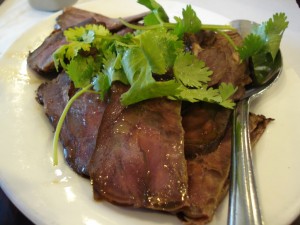
Five Spice Beef
Here’s a plate of Five Spice Beef from China House in Mountain View. It looks like they didn’t bother chopping anything, they just threw entire stalks of cilantro on the plate.
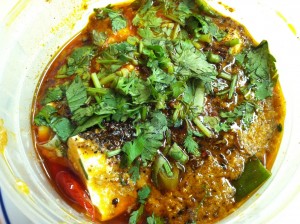
Mission Chinese Mapo Tofu
Maybe we need to look at a better restaurant? Cult favorite Mission Chinese Food in San Francisco has won all sorts of awards, so let’s take a look at their mapo tofu. Yup, you can definitely see big pieces of leaves and stems floating on that chili oil.
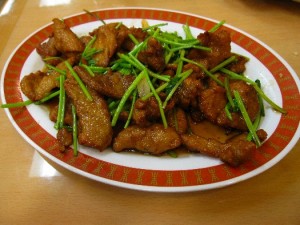
Twice Cooked Pork
And my personal favorite, Double Cooked Pork from Happy Kitchen in LA. THEY ONLY USED CILANTRO STEMS!

Let’s review the most common culinary school sins:

  • Plate not hot enough (forgot to put it in the oven)
  • Plate too hot (forgot to take it out of the oven)
  • Sauce underreduced and not nappant (sticks to the back of the spoon)
  • Sauce overreduced and too thick
  • Vegetables not brown enough or too brown/burnt
  • Meat under or overdone
  • Vegetables not cut uniformly (see taillage)
  • Not enough acid (lemon juice)
  • Food not salty enough (I’ve never been told my food’s too salty, even when I try to overseason)
  • Too much grease
  • Too much sauce (pooling at bottom of plate)
  • Sauce drips on plate edge
  • Using black pepper in a white dish (where’s your white pepper idiot?)
  • And of course, my #1 nemesis, the herb garnish is too big

In other words, no matter how hard you try, your plate is never good enough. Wait, this is starting to sound familiar…

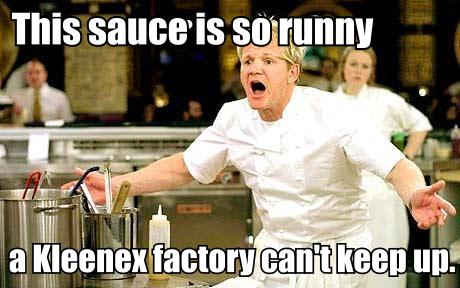
Maybe the solution is to give up on cooking?
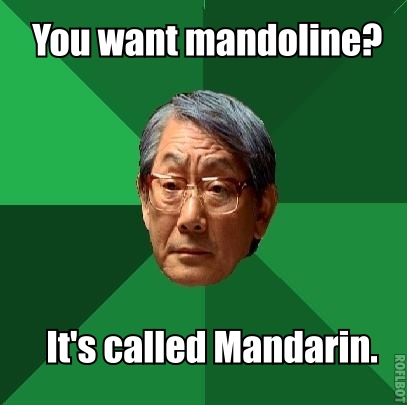
At least my extra tournage work at home paid off. Chef Ray looked at my potato cocottes and said they looked great without other comment. Phew.

I can’t even imagine how much of a pressure cooker it would be to compete on TV. (Well, maybe I can. This piece from pastry chef Allison Robicelli is a hilarious read if you’d like to hear more.) I would have a nervous breakdown. Or start pouring fish sauce on the judges’ cars.

Whatever. My new favorite food photography blog is now Dimly Lit Meals for One (exactly what it sounds like).

Clearly the solution is to start chopping like this guy:
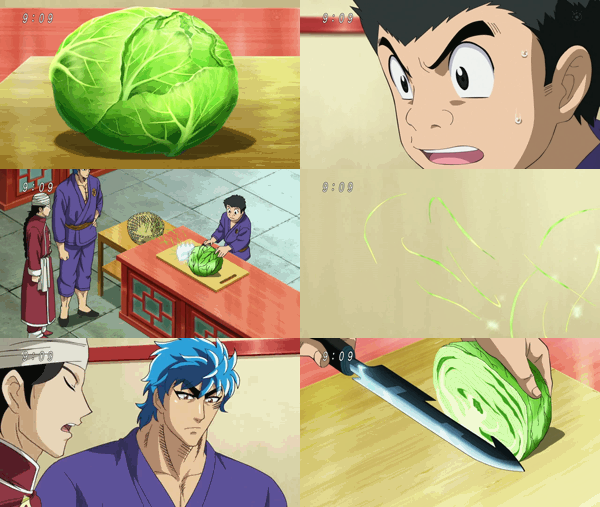
Komatsu after learning Food Honor

Moving Notice

After four lovely years at WordPress.com, I’ve decided to move my content to a new domain: http://www.crystal.kitchen (Thanks ICANN for releasing those new top-level domains!)

I’ve implemented a 301 site redirect, so visitors from the web will be automatically sent to the new site, but if you follow this blog via RSS or email, please update your subscriptions and bookmarks to the new location.

And remember, pans pulled out of the oven are hotter than they appear.

“Hit It Like a Mal Boyfriend” and Other Lessons from Chef François Payard

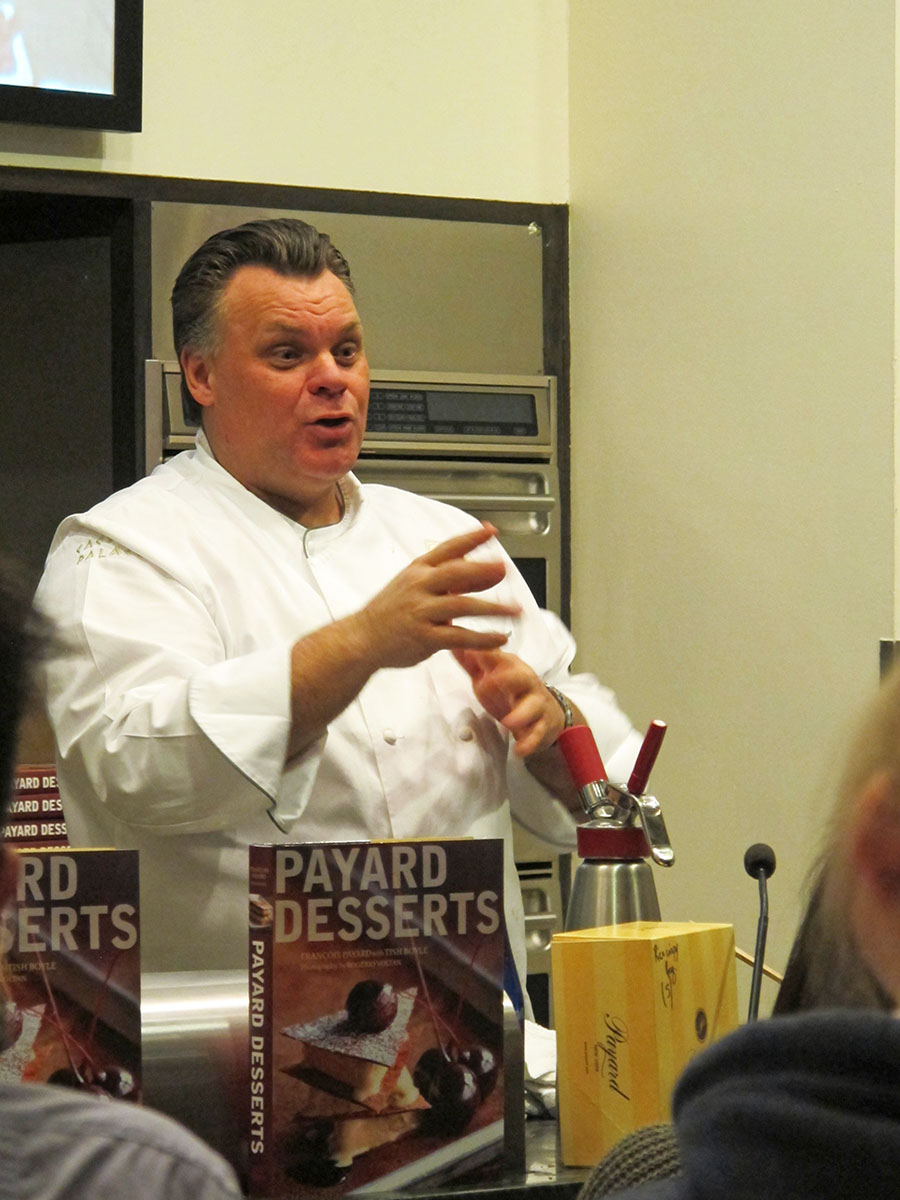
Francois Payard

François Payard is a top pastry chef, a long-standing innovator in New York’s dessert scene and winner of a James Beard award in 1995. Which is why it’s incredibly jarring when he’s looking at you from 10 feet away, asking what’s in egg whites. “Yes you, I’m looking at YOU in the second row,” he says. “Uh,” you stammer, “it can’t be lecithin because that’s in yolks…so albumin?”

Payard was giving a pastry demo for students at the International Culinary Center, and we were all there to learn some of his techniques (and secretly hoping for dessert samples). Today’s tasks: chocolate phyllo dough, caramel, chocolate rice crispies, chocolate chantilly cream. With a comfortable patter, he explained the steps he was taking while quizzing us to make sure we were paying attention. “I don’t make the phyllo dough, I buy it, like everybody else. Now, brush clarified butter and cocoa on phyllo, and between each layer, sprinkle some sugar to allow caramelization. It comes out almost like puff pastry, or if you didn’t know better, you’d think it was bad puff pastry because you have the layers but it doesn’t rise.” He picked up a heavy pan. “We want to make sure it stays flat, so then you”—whack!—”hit it like a mal boyfriend, with the back of a pan or a rolling pin.” He added more phyllo, butter and cocoa in repeating layers. “What’s the best way to cook phyllo dough?” he asked. “Use a sheet pan, upside down, with at least three trays on top to make sure it stays flat. See, all these little things will make you a chef, not a student. Always ask why you’re doing something. I’m not here to show you what I can do, I’m here to show you what you can do.”

Payard continued. “We want to make an incredible caramel. What will help give flavor to my caramel? You, in the middle.” The girl hesitated. “Salt?” she said. “Exactly,” said Payard. He demonstrated how to warm and whip cream to prevent it from exploding when being added to the sugar, and drizzled the caramel on white parchment paper to see if it was the right color. “Does anyone know what’s chocolate chantilly?” he asked. “It’s 2 cups heavy cream and 1 cup chocolate. Because it’s so simple, it’s easy to fuck it up. Your chocolate must be hot, and your cream must be cold. It’s all about technique.” Payard paused to look at us. “So, don’t fuck it up.”

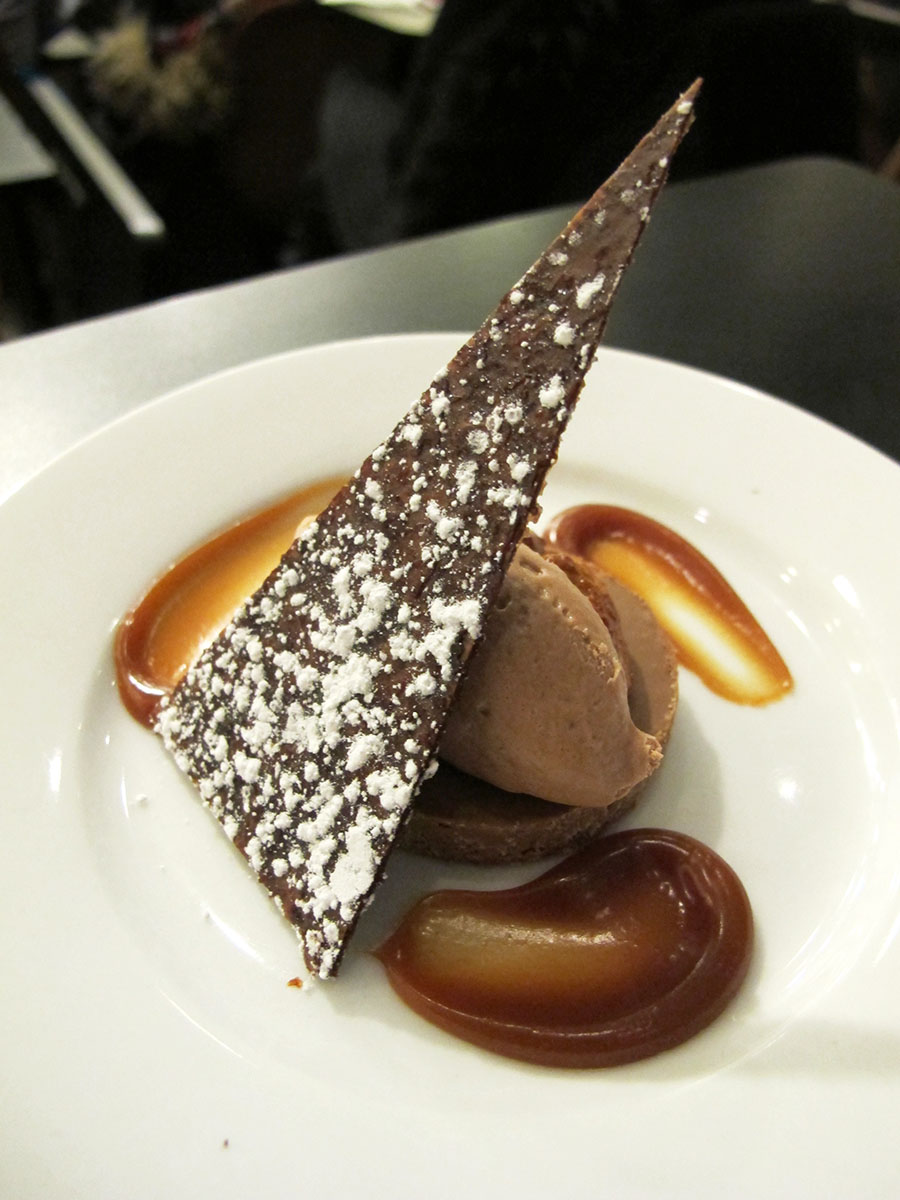
Chocolate phyllo, chantilly, rice crispie
In a matter of minutes, all of these simple components were ready to come together. Payard used a ring mold to cut out a short cylinder of rice crispies, topped it with a plump dollop of chocolate chantilly and a sharp wedge of phyllo. With a sprinkle of powdered sugar and several smears of caramel on the plate, the composed dessert was as elegant as an Oscar gown. “It’s not about complication,” Payard explained, “it’s about the right ingredients.” He waved at his cookbooks, sitting on the edge of the workstation. “In America, no one likes this book because it’s too complicated. But you should look at the components, maybe there is a chocolate sauce that you can use, or something else that you can take away. Pastry is always time consuming. In a restaurant, you already have the chocolate sauce made, you always have rice crispies on hand. If you start from scratch, it will take you four hours.”
Continue reading “Hit It Like a Mal Boyfriend” and Other Lessons from Chef François Payard